
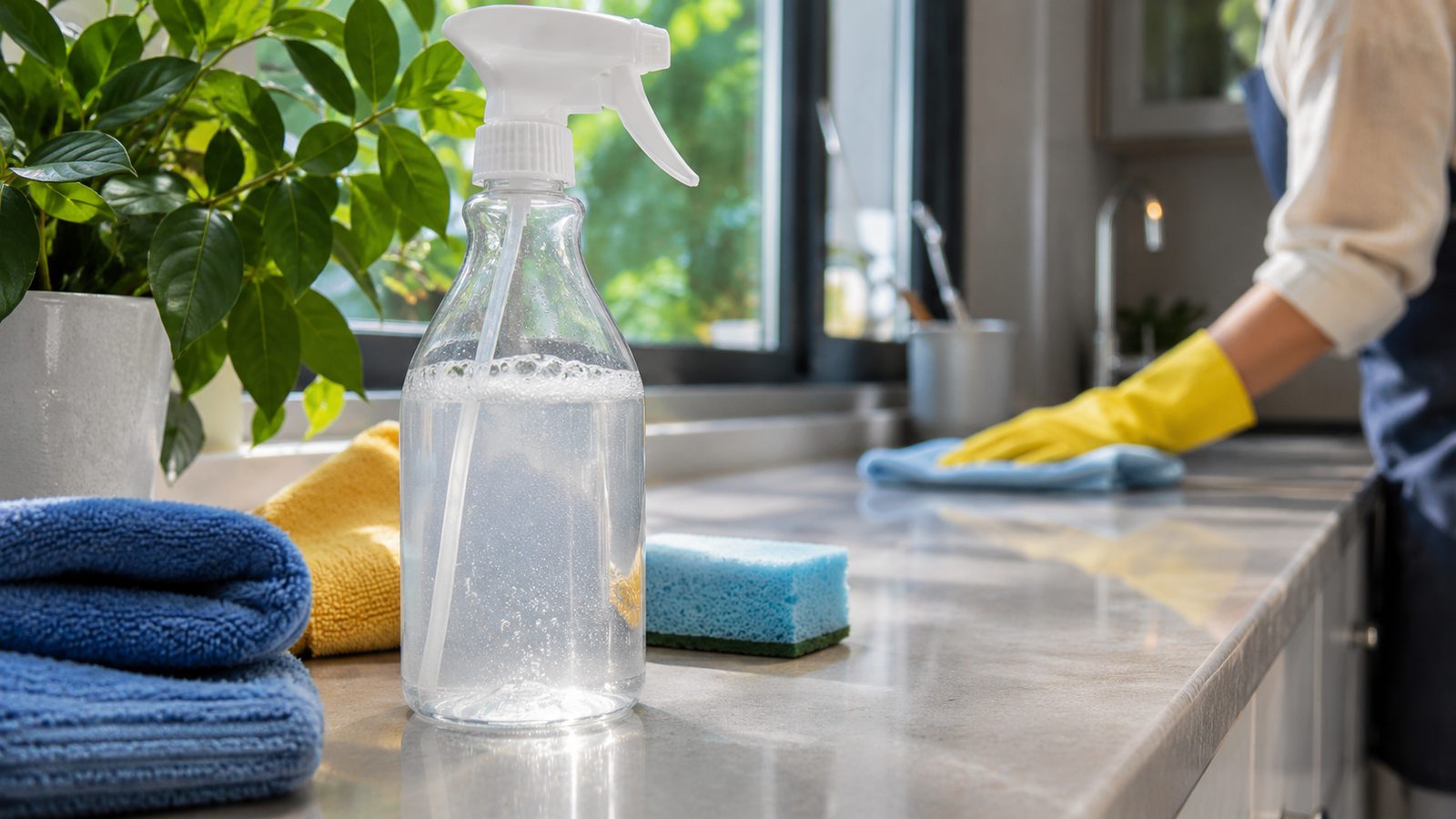
A water based cleaner uses water as its main carrier instead of relying mainly on petroleum solvents. Modern formulas can remove dirt, grease, fingerprints, oils, and other common soils from many surfaces. Their performance depends on the ingredients, surface, cleaning method, and type of contamination. They’re common in homes, workshops, vehicle care, and commercial cleaning.
| Quick Fact | What to Know |
|---|---|
| Main carrier | Water |
| Common ingredients | Surfactants, builders, chelating agents, pH adjusters, and corrosion inhibitors |
| Common uses | General dirt, fingerprints, food residue, light oils, grease, and shop soil |
| Typical advantages | Lower odor, reduced flammability, easy dilution, and broad surface use |
| Main limitations | Slower drying, possible water spots, rinsing needs, and corrosion on some metals |
| Safety check | Read the label and Safety Data Sheet rather than relying on “water-based” alone |
| U.S. buying signal | EPA Safer Choice certification can help identify products with reviewed ingredients |
Direct answer: A water-based cleaning product uses water to carry ingredients that loosen, surround, and remove dirt or grease. Surfactants help the liquid reach contaminated surfaces and separate soil from them. These products can reduce several problems linked with traditional solvents, but their ingredients still determine safety, compatibility, and environmental impact.
How Does a Water Based Cleaner Work?
Water alone struggles with many oily soils because oil and water naturally separate. Cleaning formulas solve that problem with surfactants and other supporting ingredients. Surfactants lower surface tension and help water spread across dirty areas. They also help lift and suspend oily material so it can be wiped or rinsed away. Some formulas contain builders, chelating agents, alkaline ingredients, or corrosion inhibitors. Each ingredient supports a different part of the cleaning process. Industrial products may also use heat, pressure, agitation, or ultrasonic equipment. Those methods help the formula reach soil and carry loosened contamination away. Government and technical guidance describes aqueous cleaning as a process that may depend on soap action, heat, and agitation. Water-based systems can therefore behave differently from fast-evaporating solvent products. Their success often depends on using the right concentration and enough contact time.
What Can Water-Based Cleaning Products Remove?
These products work well on many everyday soils when the formulation matches the job. Common targets include dust, fingerprints, food residue, road film, light grease, and some oils. Stronger alkaline formulas can tackle heavier organic contamination. Specialized products are available for glass, vehicles, machinery, floors, and industrial parts. Performance varies because “water-based” describes the carrier, not one fixed chemical recipe. A neutral surface spray behaves differently from a concentrated alkaline degreaser. A glass product also differs from a formula designed for greasy machine parts. Always match the product to both the soil and the material underneath. Common applications include the following.
- Kitchen counters and other compatible hard surfaces
- Floors and washable walls
- Automotive surfaces and workshop equipment
- Metal parts when the formula includes suitable corrosion protection
- Glass and certain plastics
- Commercial and industrial washdown systems
- Pressure washers and parts-washing equipment when approved by the manufacturer
For broader household projects, Writinglish also covers smart renovation ideas for improving living spaces. Choosing products that suit new finishes can help protect the work you’ve already completed. Surface care matters after renovations because aggressive chemistry can damage coatings and decorative materials.
Water-Based vs. Solvent-Based Cleaning
Neither category is automatically right for every job. Water-based products often suit general soils and situations where lower flammability or reduced solvent exposure matters. Solvent products can work quickly on certain oils, waxes, adhesives, coatings, and other solvent-soluble materials. The best choice depends on the contamination, surface, ventilation, drying needs, and product instructions.
| Factor | Water-Based Product | Solvent-Based Product |
|---|---|---|
| Main carrier | Water | Organic solvent |
| General dirt | Usually effective | Can be effective |
| Heavy grease | Formula dependent | Often effective |
| Drying speed | Usually slower | Often faster |
| Flammability | Often lower | Can be flammable |
| Odor | Often lower | Frequently stronger |
| Rinsing | May be required | Often unnecessary |
| Corrosion concern | Possible on sensitive metals | Usually less moisture-related risk |
| VOC profile | Often lower, but formula dependent | Often higher |
| Surface compatibility | Must be checked | Must be checked |
Water-based systems can take longer to dry because water evaporates more slowly than many volatile solvents. Massachusetts guidance also notes that prompt drying can help reduce corrosion concerns in aqueous parts cleaning. Some systems use rust inhibitors for the same reason.
Benefits Worth Considering
One major advantage is the ability to reduce reliance on highly volatile cleaning solvents. Many aqueous products are nonflammable or have lower fire risks than traditional petroleum-based alternatives. They can also produce less solvent vapor during routine use. These features can matter in garages, workshops, factories, and enclosed work areas. Water also makes concentrated formulas practical because many products can be diluted for different cleaning jobs. That can reduce the amount of packaged product needed for routine work. Concentration still matters because overly strong mixtures can waste chemical and leave residue. Follow the manufacturer’s dilution directions rather than guessing. Environmental claims deserve closer attention. The EPA explains that VOC content alone does not prove a household product is safer. Individual chemicals can differ greatly in toxicity even when a formula carries a low-VOC claim.
“Water-Based” Does Not Automatically Mean Safe
The phrase can sound reassuring, but it isn’t a complete safety rating. Some water-based formulas can still contain irritating, corrosive, or otherwise hazardous ingredients. Washington State’s Department of Ecology specifically warns that water-based degreasers can still be caustic. Contaminated waste from cleaning operations can also require careful handling. Check the label before using an unfamiliar product. For workplace chemicals, review the Safety Data Sheet and required protective equipment. Pay attention to pH, ventilation requirements, eye protection, glove recommendations, and disposal instructions. Never assume that a product is safe for skin because water is its main ingredient. U.S. shoppers can also look for the EPA Safer Choice program. EPA says products with this label contain ingredients evaluated against its safer-chemical criteria. The program covers categories including all-purpose products, degreasers, floor care, glass products, and kitchen cleaning formulas.
How to Choose the Right Formula
Start with the surface rather than buying the strongest product available. Painted surfaces, natural stone, aluminum, wood finishes, plastics, and electronics may have different chemical limits. Check the manufacturer’s approved surfaces before applying the solution broadly. A small test in an inconspicuous area can reveal discoloration or finish damage. Next, identify what you need to remove. Water-soluble dirt may need a different formula than heavy grease, adhesive, wax, or tar. Stronger chemistry isn’t always better because an aggressive formula can damage the material beneath the soil. Matching chemistry to contamination usually produces a cleaner result with less risk. Use these checks before buying:
- Confirm the surfaces listed on the product label.
- Identify whether you’re removing dirt, grease, mineral deposits, or another soil.
- Check whether the formula requires dilution.
- Look for rinse and drying instructions.
- Review warnings for metals, coatings, stone, plastics, or fabrics.
- Check the Safety Data Sheet when using commercial or industrial products.
- Consider EPA Safer Choice certification when safer-ingredient screening matters.
Homeowners planning new interiors should also consider future cleaning requirements before selecting finishes. Writinglish’s guide to new-construction home design ideas discusses material and design choices around modern living spaces. Surfaces that tolerate routine maintenance can be easier to manage over time.
Tips for Better Cleaning Results
Use the amount recommended by the manufacturer. Too little product may struggle to remove soil, while excessive concentrate can increase residue or rinsing. Give the solution its stated contact time before wiping. Mechanical action from a cloth, brush, spray, or washer can also improve soil removal. Rinsing matters when the instructions require it. Remaining detergent can attract dirt or interfere with later coatings and adhesives. Dry metal surfaces promptly when water exposure creates a corrosion risk. Pay extra attention to seams, recesses, and other areas where moisture can remain trapped. Don’t mix cleaning products unless the manufacturer specifically permits it. Combining household chemicals can create dangerous reactions or gases. EPA guidance notes that mixing bleach and ammonia, for example, creates toxic chloramine gas. Routine maintenance can also prevent dirt from becoming harder to remove later. That principle applies beyond indoor surfaces to roofs, gutters, and exterior materials. Writinglish’s roof repair and preventive maintenance tips offers related guidance for protecting a home’s exterior.
Are Water-Based Products Better for Indoor Air?
They can reduce exposure to certain volatile solvents, but the label requires context. EPA explains that VOCs can come from cleaning supplies and many other household products. Indoor concentrations of some organic pollutants can also exceed outdoor levels. Still, a low-VOC claim should not become the only buying test. EPA warns that low total VOC levels do not guarantee lower toxicity. Ingredient selection, ventilation, dosage, and proper use all matter. A recognized certification can provide more useful information than marketing language alone.
Frequently Asked Questions
Is a water based cleaner safe on every surface?
No, surface compatibility depends on the complete formulation. High-pH products can affect some metals, coatings, and finishes. Always read the approved-surface instructions before use. Test an unfamiliar formula on a small hidden area first.
Can water-based products remove grease?
Yes, many formulas contain surfactants, alkaline ingredients, or other agents designed for oils and grease. Cleaning strength varies widely between products. Industrial degreasers can be much stronger than general household sprays. Match the formula to the amount and type of grease.
Do water-based formulas contain solvents?
Some do. Technical sources note that certain aqueous formulas can include alcohols, glycol ethers, or other solvent ingredients. The term describes the main carrier rather than guaranteeing a solvent-free recipe. Review the ingredient information and Safety Data Sheet when that distinction matters.
Do these products need rinsing?
Many concentrated detergents require rinsing, while some ready-to-use sprays are designed for wipe-off use. Following the label helps prevent streaks or residue. Rinsing can be particularly important before painting, bonding, or applying a coating. Dry the surface fully before the next process.
Are water-based formulas environmentally friendly?
They may offer benefits, but the answer depends on their ingredients and disposal. Surfactants, builders, fragrances, and other components can have different environmental effects. EPA recommends evaluating ingredients rather than relying only on terms such as “natural” or “green.”
Choosing a Better Cleaning Product
A water based cleaner can be a practical choice for homes, garages, vehicles, and many professional cleaning jobs. The best formulas combine suitable chemistry with clear instructions for dilution, rinsing, and surface compatibility. They can reduce several drawbacks associated with traditional solvents, but they still require informed handling. Start by identifying the soil and the surface you need to clean. Then compare the label, Safety Data Sheet, drying requirements, and certification claims. For U.S. buyers seeking products screened for safer ingredients, EPA Safer Choice provides a useful starting point. Choosing by evidence rather than marketing claims helps protect both the surface and the person doing the cleaning. —