
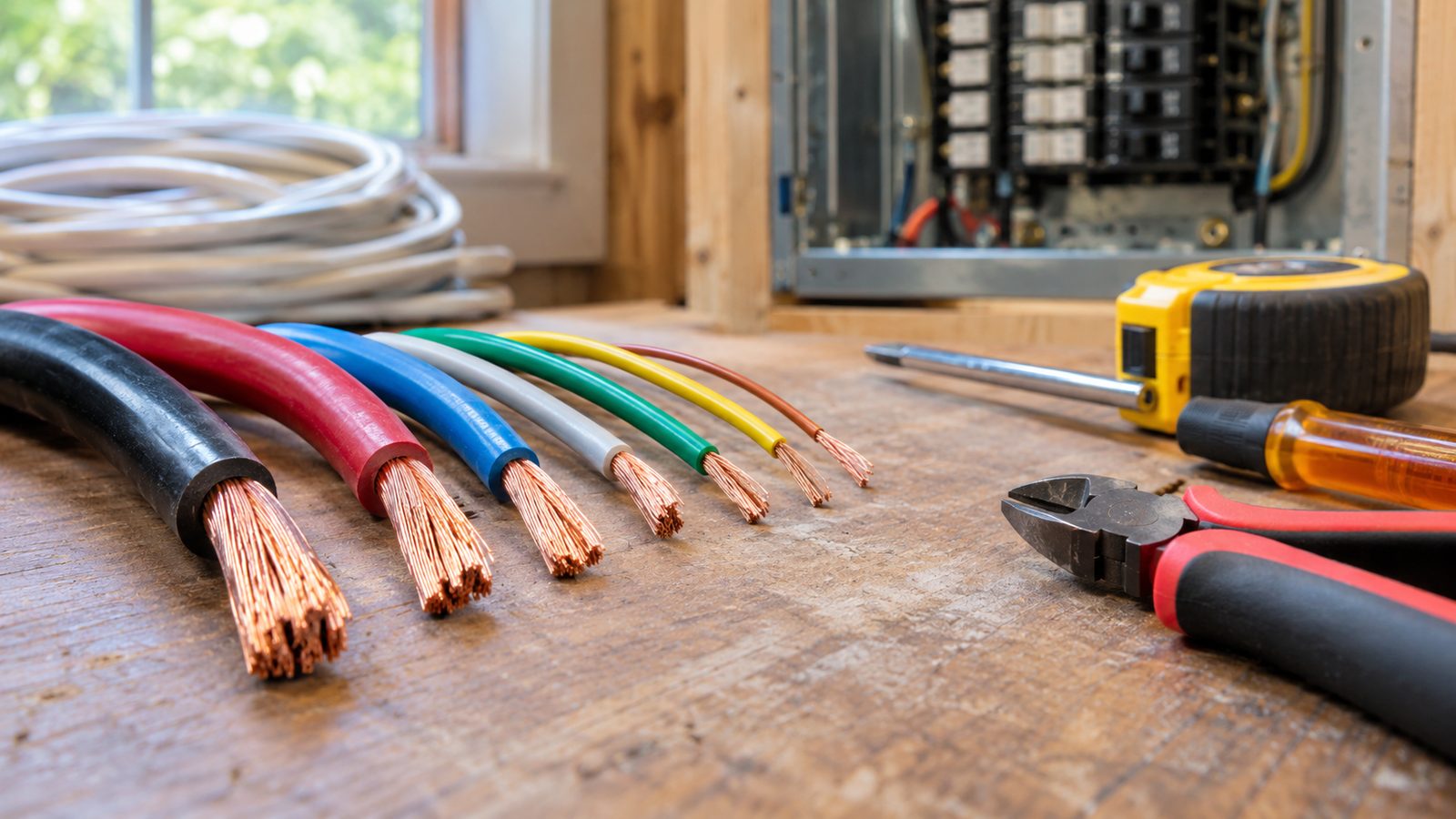
Choosing the correct wire gauge helps electrical equipment operate safely and efficiently. In the United States, most conductor sizes use the American Wire Gauge system. The right size depends on current, distance, material, installation conditions, and applicable electrical codes. Direct answer: American Wire Gauge, or AWG, identifies the size of an electrical conductor. Lower AWG numbers indicate thicker conductors with less resistance. For common residential copper circuits, 14 AWG often serves 15-amp circuits, 12 AWG serves 20-amp circuits, and 10 AWG serves 30-amp circuits.
| Common AWG size | Typical copper branch-circuit example | Approximate diameter | Common application |
|---|---|---|---|
| 14 AWG | 15 amps | 0.064 in | Lighting and general circuits |
| 12 AWG | 20 amps | 0.081 in | Kitchen, bathroom, and receptacle circuits |
| 10 AWG | 30 amps | 0.102 in | Dryers, water heaters, larger equipment |
| 8 AWG | Application dependent | 0.129 in | Feeders and larger loads |
| 6 AWG | Application dependent | 0.162 in | Large appliances, feeders, and equipment |
These values are starting points rather than universal installation rules. Temperature ratings, terminals, conductor material, and cable type can change allowable ampacity. Always follow the applicable National Electrical Code requirements and local rules.
What Does Wire Gauge Mean?
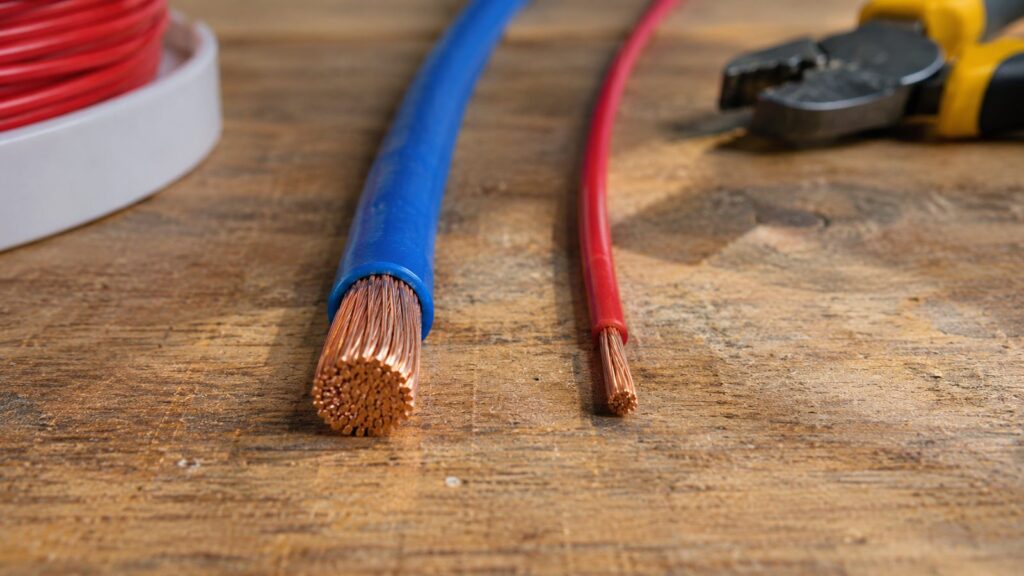
American Wire Gauge is a standardized system for describing conductor size. ASTM B258 specifies nominal diameters and cross-sectional areas for solid round AWG conductors. The system may feel backward because a smaller number represents a larger conductor. For example, 10 AWG is thicker than 12 AWG. Likewise, 12 AWG is thicker than 14 AWG. Larger conductors generally have less electrical resistance and can handle more current under suitable conditions. AWG describes the conductor rather than the entire cable assembly. Insulation thickness can make two cables look different despite matching conductor sizes. Cable markings should therefore be checked instead of estimating size from appearance.
How the AWG Numbering System Works
The AWG scale uses standardized steps rather than simple millimeter measurements. Each change in gauge represents a predictable change in conductor diameter and area. Larger sizes eventually progress through 1/0, 2/0, 3/0, and 4/0. A thicker conductor offers less resistance than a thinner conductor of equal material and length. Lower resistance reduces heat generation and voltage loss. These properties explain why demanding circuits often require larger conductors. Wire material also matters when comparing sizes. Copper and aluminum have different electrical properties. You should never assume identical AWG numbers provide identical installation requirements for both materials.
Common AWG Sizes Used in U.S. Homes
Residential electrical work commonly uses 14, 12, and 10 AWG copper conductors. These sizes appear frequently because many household branch circuits use 15, 20, or 30 amps. Larger loads and feeders may require substantially larger conductors. A typical 15-amp branch circuit may use 14 AWG copper where permitted. A typical 20-amp circuit commonly uses 12 AWG copper. Thirty-amp household circuits frequently use 10 AWG copper under appropriate installation conditions. These examples should not replace an electrical calculation or code review. Equipment instructions may require a specific conductor size. Local amendments can also affect what an installer must use. Readers planning broader residential projects can also browse Writinglish’s home improvement guides. Those articles cover other considerations involved in maintaining and improving a home. Electrical work should still follow qualified professional guidance.
How to Choose the Right Wire Size
Choosing a conductor requires more than matching an amp number to a chart. You must consider the circuit as a complete system. Use these factors before making a final selection.
- Determine the circuit current. Identify the expected load and required overcurrent protection.
- Check the conductor material. Copper and aluminum require different sizing considerations.
- Check the run length. Longer runs increase resistance and voltage drop.
- Review insulation ratings. Temperature ratings affect allowable conductor ampacity.
- Consider installation conditions. Conduit fill, bundling, and ambient heat can require adjustments.
- Check equipment terminals. Terminal temperature ratings can limit usable ampacity.
- Confirm applicable code. NEC requirements and local amendments control building installations.
This process helps prevent the common mistake of choosing solely from a simplified chart. A chart can provide a useful starting point. The final size should satisfy every relevant condition.
Why Ampacity Matters
Ampacity describes how much current a conductor can carry under specified conditions. Excessive current creates heat because every conductor has electrical resistance. Too much heat can damage insulation and create a serious fire hazard. Ampacity is not determined by AWG size alone. Installation method, ambient temperature, conductor count, and insulation rating can affect the allowable value. Equipment terminal ratings can also restrict the permitted conductor ampacity. This distinction explains why online amp charts sometimes show different values. They may use different temperature columns or installation assumptions. Check the assumptions before applying any published number.
Voltage Drop Can Require a Larger Conductor
A conductor can satisfy ampacity requirements yet still perform poorly over a long distance. Resistance causes voltage to decrease between the source and load. Longer distances and higher currents increase that voltage loss. The NEC includes informational guidance encouraging reasonable voltage drop in building circuits. A common design target is about three percent on a branch circuit. Combined feeder and branch-circuit drop is commonly designed around five percent. These percentages are design guidance rather than a universal sizing shortcut. Sensitive equipment may require tighter limits. Long circuits may therefore need a larger conductor than ampacity alone suggests. Consider a 120-volt load located far from the electrical panel. A 12 AWG conductor might satisfy the current requirement. Increasing conductor size can still reduce voltage loss when the run becomes long.
Why Lower AWG Numbers Mean Thicker Wire
The reverse numbering system comes from how traditional drawing processes produced wire sizes. Repeated drawing reduced conductor diameter through progressively smaller dies. The resulting standardized system retained numbers that decrease as conductor size increases. That means 8 AWG is thicker than 10 AWG. Ten AWG is thicker than 12 AWG. Once this pattern becomes familiar, reading AWG charts becomes much easier. The same rule applies throughout the normal AWG range. Sizes below zero use designations such as 1/0 and 2/0. Increasing the number before “/0” indicates a larger conductor.
Solid Wire Versus Stranded Wire
Solid wire uses one continuous conductor. Stranded wire uses multiple smaller strands to create a flexible conductor. Both constructions can carry the same nominal AWG designation. Stranded wire is easier to bend and often suits applications involving movement. Solid conductors hold their shape and commonly appear in permanent building wiring. The correct choice depends on the cable type and approved application. Do not measure stranded cable by comparing its outside insulation diameter with solid cable. Construction and insulation can change the visible size. Read manufacturer markings whenever possible. For related equipment and electronics topics, Writinglish also maintains a tech section. It can help readers explore other technical subjects. Electrical installation requirements should still come from applicable codes and product documentation.
Copper Versus Aluminum Conductors
Copper has lower electrical resistance than aluminum for the same cross-sectional area. Aluminum conductors therefore require their own sizing and termination rules. You should never substitute one material based only on matching AWG numbers. Terminals must also be approved for the conductor material being connected. Improper connections can create excessive heat. Antioxidant compounds may be required in particular products or installations. Large feeders and service conductors often use aluminum because of cost and weight advantages. Smaller residential branch circuits commonly use copper. A licensed electrician can determine which material suits a specific installation.
Wire Size for Automotive and Low-Voltage Applications
Automotive wiring uses AWG sizing, but building-circuit ampacity tables should not be copied blindly. Vehicle systems operate at low voltages and often experience vibration. Voltage drop can become especially important in 12-volt circuits. A one-volt loss is relatively small on a 120-volt household circuit. The same loss represents a large percentage of a 12-volt supply. Long battery, amplifier, lighting, and accessory runs may therefore need thicker conductors. Automotive cable construction can also differ between products. Check the manufacturer’s conductor specification rather than relying only on the printed gauge number. Writinglish’s automobile articles provide additional reading for vehicle owners.
Mistakes to Avoid When Selecting Electrical Wire
Using a smaller conductor to save money can create overheating or poor equipment performance. Choosing only from a generic online chart can cause similar problems. The chart may not match your installation conditions. Another mistake involves ignoring circuit distance. Long cable runs increase resistance and voltage loss. Upsizing the conductor can improve performance when voltage drop becomes excessive. Homeowners should also avoid assuming breaker size alone determines every installation detail. Cable type, temperature limitations, terminals, and load characteristics still matter. Complex electrical work is best reviewed by a qualified electrician.
When Should You Call an Electrician?
Professional help makes sense when wiring involves service equipment, panel changes, feeders, or unfamiliar code requirements. The same applies when conductor calculations require adjustment factors. Mistakes around high-current equipment can create severe safety risks. An electrician can evaluate the load, conductor material, installation method, and protective device together. They can also check local permitting requirements. This approach provides more confidence than selecting cable from a chart alone. Simple reference information can still help you understand an electrician’s recommendation. Knowing how AWG numbering works makes estimates easier to review. It also helps you recognize why two similar circuits may require different conductor sizes.
Frequently Asked Questions About Wire Gauge
What wire gauge is used for a 20-amp circuit?
A 20-amp residential branch circuit commonly uses 12 AWG copper conductor under standard conditions. The exact installation must still satisfy applicable NEC and local requirements. Temperature ratings and conductor material can affect the final choice.
Is 12 AWG or 14 AWG thicker?
Twelve AWG is thicker than 14 AWG because AWG numbering works in reverse. The 12 AWG conductor also has a larger cross-sectional area. That larger area provides lower resistance than 14 AWG of the same material.
Can I use 12 AWG wire on a 15-amp circuit?
A larger conductor can often be used where installation rules and terminals permit it. Physical terminal capacity and equipment instructions still need checking. Never reduce conductor size below applicable circuit requirements.
Does a longer wire run need thicker wire?
Longer runs can require thicker conductors because electrical resistance causes voltage drop. The effect becomes more significant as current and distance increase. Low-voltage systems can be particularly sensitive to these losses.
Is AWG the same as millimeters?
No, AWG and square millimeters describe conductor size using different systems. AWG uses standardized gauge numbers, while metric systems commonly use cross-sectional area. Conversions are approximate because the standard size series do not match exactly.
How do I know what size electrical wire I have?
Start by checking printed markings on the cable jacket or conductor insulation. Those markings often identify AWG size, material, and cable type. A proper measuring tool can help when readable markings are unavailable.
Final Takeaway
Correct conductor sizing begins with current but does not end there. Distance, material, temperature, terminals, and installation method can change the required size. Treat simplified amp charts as reference tools rather than universal instructions. For U.S. building work, verify your selection against the applicable NEC requirements and local electrical rules. Follow equipment manufacturer instructions where they impose additional limits. Hire a qualified electrician when the installation exceeds your experience or involves hazardous electrical work. —