
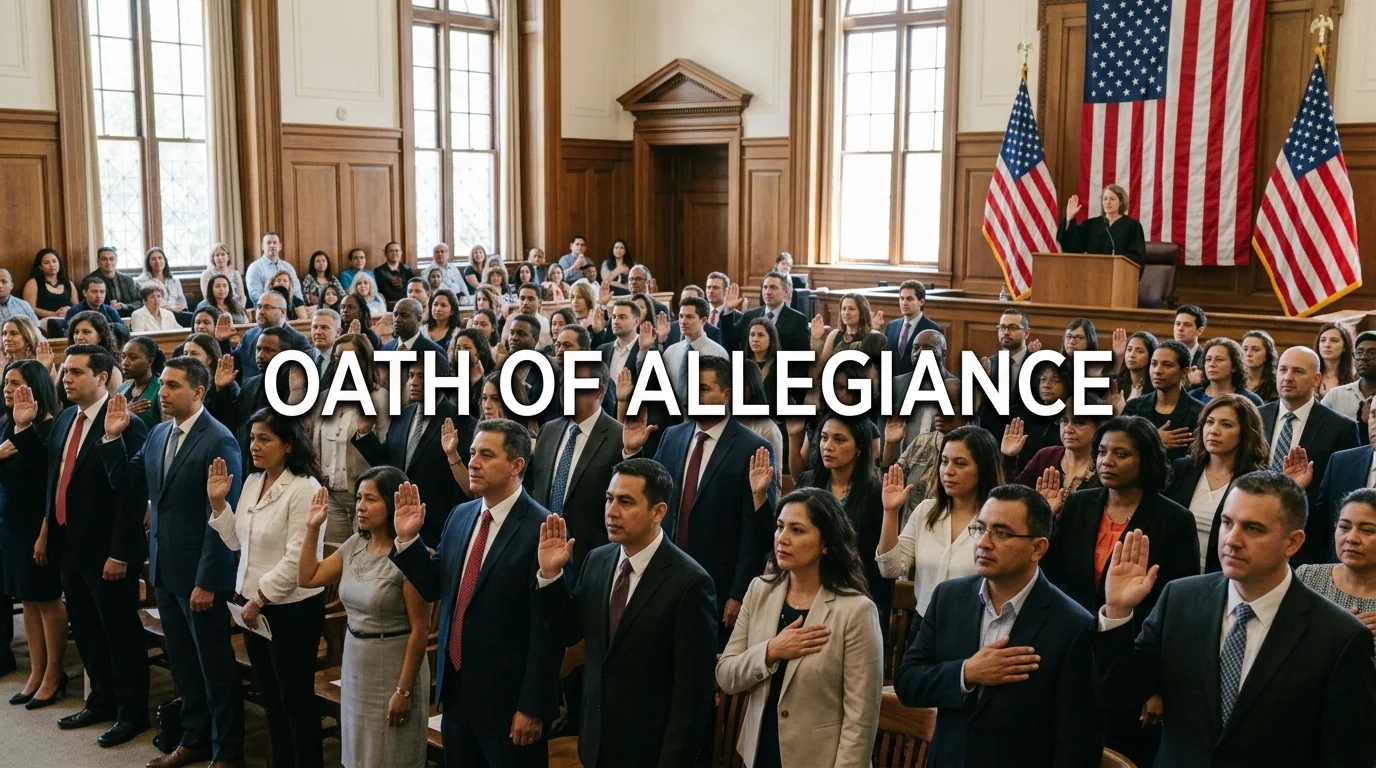
The oath of allegiance is the formal promise most naturalization applicants make before becoming U.S. citizens. It confirms loyalty to the United States, support for the Constitution and federal laws, and acceptance of certain duties that citizenship may require. For an approved naturalization applicant, taking this oath at the ceremony marks the legal transition to U.S. citizenship.
| Key fact | What it means |
|---|---|
| Purpose | A formal commitment to the United States and its Constitution |
| Who takes it | Most applicants completing the U.S. naturalization process |
| When it happens | After USCIS approves the naturalization application |
| Where it happens | At an authorized naturalization ceremony |
| Citizenship begins | When the applicant takes the citizenship oath |
| Main document afterward | Certificate of Naturalization |
| Possible changes | Some applicants qualify for an affirmation, modification, or waiver |
Direct answer: The U.S. citizenship oath is the final legal commitment in the naturalization process. You promise loyalty to the United States, support for its Constitution and laws, and certain forms of service if required by law. Once an eligible applicant takes it at the ceremony, the applicant becomes a U.S. citizen.
Key Takeaways
- The citizenship oath is more than a ceremonial statement; federal law makes it part of naturalization.
- You become a U.S. citizen when you take the oath, not merely when USCIS approves Form N-400.
- The promises include loyalty, constitutional support, and possible military, noncombatant, or civilian service.
- Certain clauses can be changed for qualifying religious or conscientious objections.
- Taking the U.S. citizenship oath does not automatically determine whether another country continues to regard you as its citizen.
What Does the Oath of Allegiance Mean in the United States?
In everyday English, an oath is a serious promise, while allegiance means loyalty or faithful support. In U.S. naturalization, the phrase has a more specific legal role because the applicant publicly accepts duties connected with American citizenship. Federal law requires eligible naturalization applicants to make these commitments before they are admitted to citizenship.
Some of the official wording sounds old-fashioned because it uses terms such as “renounce,” “abjure,” “fidelity,” and “potentate.” In plain English, the applicant is declaring that loyalty now belongs to the United States rather than a foreign ruler or government. Readers who enjoy breaking formal language into simpler meanings can also explore Writinglish’s Education section and its guide to plain-English legal vocabulary.
The promise also covers the Constitution and laws of the United States. Applicants agree to “support and defend the Constitution and laws,” language that appears in the federally prescribed text. The pledge therefore combines loyalty with a commitment to the country’s constitutional system and legal order.
What Are You Promising When You Take the U.S. Citizenship Oath?
Federal law identifies several commitments that naturalization applicants make, and 8 U.S.C. § 1448, the oath of renunciation and allegiance, sets out those five clauses in full. Reading them separately makes the formal wording much easier to understand. The following table translates those commitments into practical, plain English.
| Promise | Plain-English meaning |
|---|---|
| Renounce prior foreign allegiance | Declare that your political loyalty is now to the United States |
| Support the Constitution and laws | Respect and defend the U.S. constitutional and legal system |
| Bear true faith and allegiance | Remain loyal to the United States |
| Bear arms if required by law | Accept military service if the law requires it and the clause applies to you |
| Perform noncombatant service | Accept qualifying noncombatant military duties if legally required |
| Perform work of national importance | Accept qualifying civilian service when required by law |
| Take the obligation freely | Confirm that you are making the commitments voluntarily and sincerely |
The service clauses can sound as though every new citizen is immediately agreeing to join the military. That is not what the wording says; the duties apply when required by law. The oath recognizes possible legal obligations rather than creating an automatic military assignment at the ceremony.
The final commitment also matters because naturalization requires genuine willingness to accept the promises being made. Federal regulations state that an applicant must intend in good faith to assume and discharge these obligations. For related explanations of U.S. legal concepts, readers can browse the Writinglish Law section.
When Do You Officially Become a U.S. Citizen?
Approval of Form N-400 does not, by itself, make a naturalization applicant a citizen. USCIS states that an approved applicant remains a permanent resident until taking the citizenship oath at a naturalization ceremony. After that step, USCIS provides the new citizen with a Certificate of Naturalization.
This timing is important when completing paperwork that asks for your date of naturalization. Your relevant citizenship date is tied to the ceremony and oath, rather than simply the date USCIS approved the application. The Certificate of Naturalization should show the information you need, so review that document carefully when you receive it.
What Happens at a U.S. Naturalization Ceremony?
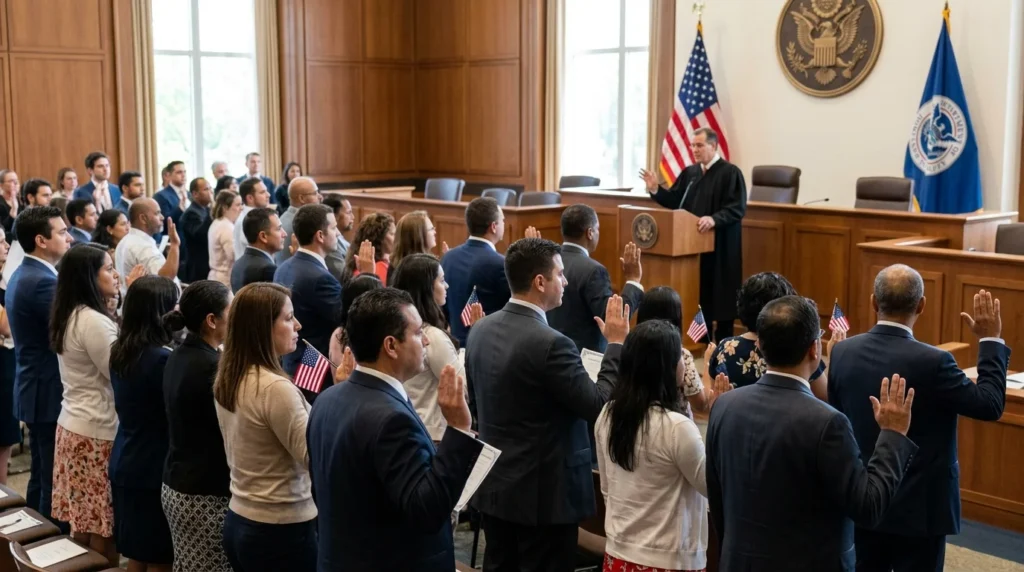
After USCIS approves an application, the agency schedules the applicant for the oath stage. USCIS instructions say applicants receive a ceremony notice, check in when they arrive, and have an officer review their Form N-445 responses. USCIS also generally collects the applicant’s Permanent Resident Card before the ceremony proceeds.
The authorized official then administers the citizenship oath to the eligible applicants. After completing it, the applicants become U.S. citizens and receive their Certificates of Naturalization. Ceremony details can vary by venue, so applicants should follow the instructions on their USCIS notice rather than relying only on another person’s experience.
Applicants should also report relevant changes that occurred after the naturalization interview when completing the ceremony questionnaire. An arrest, extended trip, marriage-related change, or another development may require review before USCIS administers the oath. If you are uncertain about how a change affects your eligibility, professional immigration advice may be appropriate.
Can the Citizenship Oath Be Modified?
Yes, federal rules allow specific modifications in qualifying situations. Current Form N-400 instructions state that applicants may seek removal of the clauses concerning bearing arms or performing noncombatant military service when a religious or conscientious objection applies. That modification cannot remove the civilian-work commitment.
An applicant can also request an affirmation instead of religiously framed oath language. USCIS instructions permit replacing “on oath” with “solemnly affirm” and omitting “so help me God,” and they state that documentation is not required for that request. Federal regulations likewise recognize an affirmation as an acceptable alternative.
A waiver differs from a modification because it can remove the requirement to take the oath in person. USCIS may grant a waiver when a physical or developmental disability or mental impairment prevents an applicant from understanding or communicating the oath’s meaning. USCIS has specific procedures and medical-documentation rules for these cases, so applicants seeking a waiver should use current agency guidance.
Does Renouncing Foreign Allegiance End Dual Citizenship?
Renunciation language often confuses people who already hold another nationality. From the U.S. perspective, a naturalizing citizen makes a serious declaration of allegiance to the United States. Whether another nationality legally ends, though, also depends on the laws of the other country.
The U.S. Department of State recognizes that a naturalized American may still retain another nationality when the other country’s law permits it. Some countries automatically withdraw citizenship after foreign naturalization, while others continue recognizing the person as their citizen. Anyone concerned about keeping or losing another nationality should therefore check that country’s current law or contact its embassy or consulate.
How to Prepare for the Ceremony
Start by reading Form N-445 and every instruction USCIS sends with your ceremony notice. Review the official wording beforehand so the formal vocabulary does not feel unfamiliar on the day. Also prepare the documents requested in your notice and arrive at the stated time, following the security instructions.
Before leaving the ceremony, carefully inspect your Certificate of Naturalization for errors in your name and other identifying information. Keep the original certificate secure because it is important evidence of U.S. citizenship. Then follow the appropriate official procedures for post-naturalization tasks, such as applying for a U.S. passport and updating relevant records.
Frequently Asked Questions
What is an oath of loyalty to the United States?
It is a formal promise that confirms loyalty to the United States and acceptance of responsibilities connected with citizenship. For naturalizing citizens, the federally prescribed promises include supporting the Constitution and laws and accepting certain forms of service when required. It is both a symbolic ceremony and a legal part of the naturalization process.
Do I have to memorize the Oath of Allegiance?
You generally don’t need to treat the ceremony like a memorization exam. Ceremony officials lead applicants through the required wording, and naturalization resources recommend becoming familiar with the text rather than trying to pass a separate memory test. Reviewing the language beforehand is still useful because you should understand the commitments you are making.
Do I become a citizen when USCIS approves my N-400?
No, approval is an essential step, but it is not normally the final act of naturalization. USCIS states that you are not a U.S. citizen until you take the citizenship oath at the naturalization ceremony. You then receive your Certificate of Naturalization as evidence of your new status.
Can I leave out “so help me God”?
USCIS permits an applicant to request an affirmation that omits those words. The applicant may also substitute “solemnly affirm” for “on oath,” and current Form N-400 instructions say documentation is not required for this request. This option is distinct from requesting removal of the military-service clauses.
Can taking the citizenship oath cancel my old nationality?
It can affect another nationality, but there is no single answer that applies to every country. The State Department notes that some naturalized U.S. citizens continue to hold another nationality because their other country does not treat U.S. naturalization as automatically ending citizenship. Check the law of the country involved before assuming your status.
A Final Step With Real Legal Meaning
For most naturalization applicants, the ceremony is when years of immigration paperwork finally turn into U.S. citizenship. Understanding the promises before that day makes the formal language easier to follow and helps you recognize the responsibilities you are accepting.