
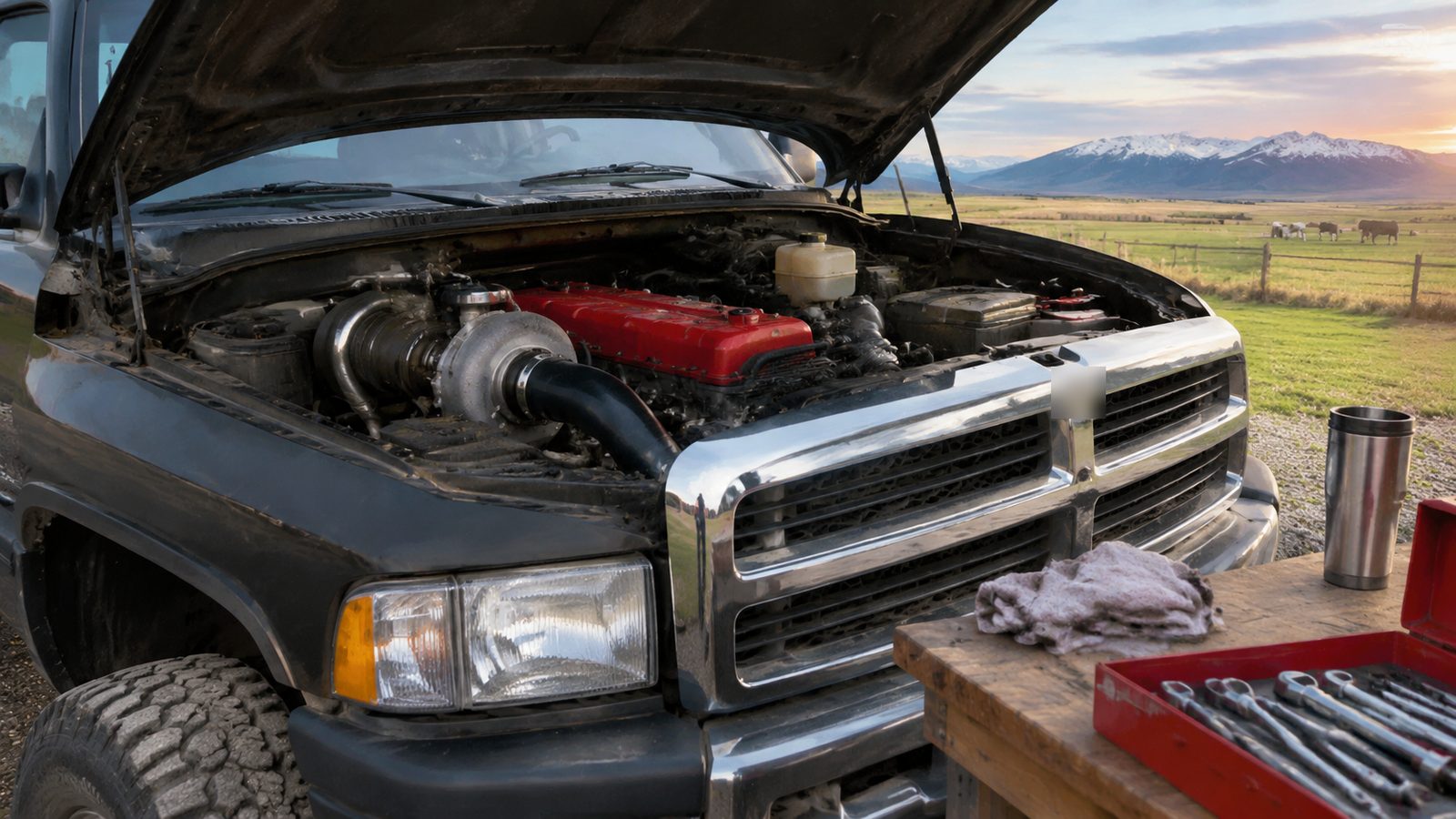
The 12V Cummins remains one of the most recognizable diesel engines used in American pickup trucks. Its mechanical fuel system makes it simpler than many later diesel designs. Buyers still value its durability, repairability, towing ability, and modification potential. The engine powered Dodge diesel pickups from 1989 through 1998. Earlier versions used a Bosch VE rotary injection pump. Later models received the desirable Bosch P7100 inline pump. Direct answer: The 5.9-liter 12-valve is a turbocharged, mechanically injected inline-six built for durability and low-speed torque. Factory Dodge applications produced roughly 160–215 horsepower and 400–440 lb-ft of torque. Condition matters more than mileage because every original truck is now decades old.
| Key Fact | Details |
|---|---|
| Engine family | 5.9L B-Series 6BT |
| Configuration | Turbocharged inline-six diesel |
| Displacement | 5.9 liters / 359 cubic inches |
| Production in Dodge pickups | 1989–1998 |
| Valvetrain | Two valves per cylinder, 12 total |
| Fuel system, 1989–1993 | Bosch VE rotary injection pump |
| Fuel system, 1994–1998 | Bosch P7100 inline injection pump |
| Factory horsepower | About 160–215 hp |
| Factory torque | About 400–440 lb-ft |
| Block and head | Cast iron |
| Major concern | Killer dowel pin and age-related truck condition |
Key Takeaways
* The engine uses mechanical direct injection rather than a modern common-rail system. * The 1994–1998 P-pump versions attract strong interest from performance enthusiasts. * Factory power is modest compared with modern diesels, but low-speed torque remains useful. * The killer dowel pin deserves attention during any serious pre-purchase inspection. * Rust, transmission condition, modifications, and maintenance records can matter more than mileage. * A stock or lightly modified truck is usually easier to evaluate than an undocumented performance build.
12V Cummins Specs at a Glance
The 5.9L 6BT uses a cast-iron block, cast-iron head, and inline-six layout. Its bore measures about 4.02 inches, while stroke measures about 4.72 inches. The design favors useful low-speed torque rather than high engine speed. Factory Dodge applications produced about 160 to 215 horsepower across the production run. Torque ranged from roughly 400 to 440 lb-ft in documented configurations. Output changed with model year, injection equipment, intercooling, transmission, and calibration. The engine also uses mechanical fuel injection and mechanical injectors. That design removes several electronic fuel-system components found on newer diesels. Mechanical simplicity remains a major reason enthusiasts continue seeking these trucks.
What Years Used the 12-Valve 5.9L?
Dodge introduced the turbocharged 5.9L diesel in its heavy-duty pickups for the 1989 model year. First-generation applications continued through 1993. These trucks used the Bosch VE rotary injection pump. Second-generation Dodge Ram 2500 and 3500 models arrived for 1994. Their engines generally used the Bosch P7100 inline pump. The 12-valve era ended in 1998 as Dodge transitioned toward the 24-valve design. That split matters because the two fuel systems have different characteristics. VE-pump trucks appeal to drivers seeking simplicity and an older first-generation body. P7100-equipped trucks usually attract buyers interested in greater mechanical fueling potential.
VE Pump vs. P7100: Why the Difference Matters
The Bosch VE is a compact rotary injection pump used on 1989–1993 Dodge applications. It supports reliable stock operation when maintained correctly. Its fueling potential is more limited than the later inline pump. The P7100 arrived with second-generation trucks in 1994. It became popular because fueling changes can be made mechanically. That flexibility helped build the P-pump engine’s strong following among performance enthusiasts. More modification potential does not automatically make a P-pump truck the better purchase. Heavy fueling can increase exhaust temperature and transmission stress. A documented stock truck may be safer than an unknown modified example.
Why Is This Engine Considered So Reliable?
Several design choices contribute to its long-standing reputation. The engine has a stout cast-iron structure and relatively simple mechanical injection. It also predates the complex emissions systems fitted to modern diesel pickups. Fewer electronic fuel-control components can simplify diagnosis and repair. That advantage becomes valuable on older work trucks or project vehicles. Still, mechanical simplicity does not eliminate normal wear, leaks, corrosion, or neglected maintenance. Age now changes the reliability discussion more than reputation does. Even the newest original 12-valve Dodge trucks are more than 25 years old. Rubber parts, wiring, cooling components, seals, transmissions, and chassis hardware deserve equal attention.
Common Problems You Should Check
A durable engine can still develop expensive problems. Most concerns are well known, which makes inspection easier for informed buyers. The surrounding truck can also create costs unrelated to the engine.
Killer Dowel Pin
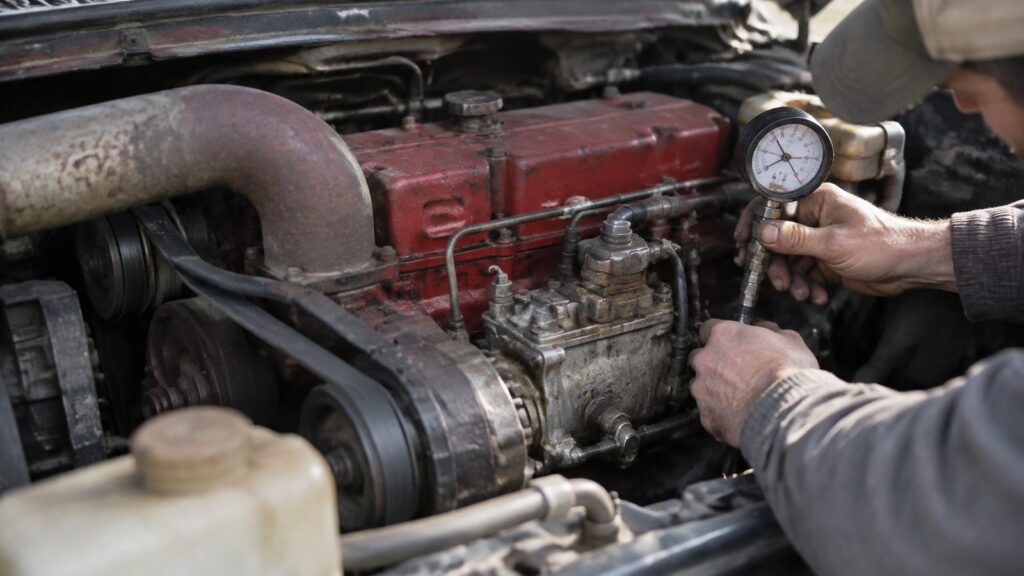
The best-known concern is the killer dowel pin, often shortened to KDP. This alignment pin sits near the front gear housing. Vibration can allow it to work loose on affected engines. A loose pin can fall into the front gear train. Outcomes range from little damage to broken gears or a damaged timing housing. A retaining tab is a common preventive repair when the area is serviced. Documentation matters when a seller claims the repair was completed. Ask for receipts, photographs, or service records when possible. An unsupported statement should not replace an inspection.
Oil and Fuel Leaks
Old seals, hoses, fittings, and gaskets can leak after decades of use. A small seep does not automatically mean the engine is worn out. Heavy leakage deserves closer investigation before purchase. Check the front of the engine, injection system, valve covers, and surrounding lines. Freshly cleaned surfaces can hide recent leakage. Inspect the truck after a proper road test whenever possible.
Exhaust Manifold and Turbo Wear
Repeated heat cycles can stress exhaust components over time. Cracks, loose hardware, or exhaust leaks may reduce performance. Turbocharger wear can also produce noise, oil leakage, or poor boost response. Look for soot around manifold joints and listen for unusual sounds under load. Check turbo shaft condition if access permits. Do not assume every power complaint requires a larger turbocharger.
Transmission and Driveline Problems
The engine’s reputation can distract buyers from the transmission behind it. Automatic and manual gearboxes may need expensive work after years of towing or increased power. Modified trucks deserve added scrutiny. Test every gear under normal driving conditions and moderate load. Watch for slipping, delayed engagement, clutch trouble, or unusual vibration. Service records can reveal whether previous owners addressed known driveline weaknesses. For more general vehicle-care ideas, Writinglish also covers road-ready maintenance practices. The vehicle type differs, but the inspection mindset remains useful. Fluids, tires, electrical systems, and preventive care still affect ownership costs.
How Much Power Can You Make?
Factory output looks modest beside current heavy-duty pickups. The engine became famous because mechanical fuel and airflow changes can raise output considerably. Exact safe limits depend heavily on the complete build. Fuel delivery, airflow, exhaust temperature, cylinder pressure, and transmission strength all influence reliability. A dyno number alone cannot prove a truck will survive regular towing. Power goals should match how the vehicle will be used. Street trucks usually benefit from a balanced combination rather than maximum fueling. Gauges and supporting modifications become more important as output increases. Transmission upgrades may become necessary before the engine itself reaches its mechanical limit.
What to Check Before Buying One
A pre-purchase inspection should evaluate the entire truck rather than its odometer alone. Thirty years of maintenance and modifications create large differences between examples. A higher-mileage stock truck can be preferable to a poorly modified low-mileage truck. Check these items before making an offer:
* Confirm the engine identity and model year. * Ask whether the KDP has been secured. * Start the engine completely cold. * Watch for excessive smoke or unusual starting behavior. * Check blow-by without relying on one crude test. * Inspect coolant condition and signs of contamination. * Look for major oil, fuel, or coolant leaks. * Review transmission operation carefully. * Inspect the frame, cab, bed, suspension, and steering for rust or wear. * Ask for modification receipts and maintenance records. * Verify that emissions-related changes comply with applicable laws. * Budget for age-related repairs even when the engine runs well.
Writinglish has a motorcycle buying guide that emphasizes condition, maintenance, and ownership costs. Those principles also apply to older diesel pickups. The purchase price is only one part of long-term ownership.
Is a First-Generation or Second-Generation Truck Better?
First-generation trucks offer classic styling and the VE injection system. Their simpler body design attracts collectors and traditional diesel enthusiasts. Clean examples can be difficult to find because rust and age have reduced supply. Second-generation trucks provide the P7100 pump and a newer chassis design. They offer greater factory output in later years. Their mechanical injection system also supports extensive performance modification. Neither generation is automatically the right choice. Condition, documentation, rust, transmission health, and previous modifications should drive the decision. Buyers should compare individual trucks instead of shopping only by year. Readers interested in other performance-focused machines can also explore Writinglish’s guide to popular Ducati models. For broader vehicle content, visit the site’s Automobile section. Both pages provide additional automotive reading without forcing unrelated diesel links.
Is a 12-Valve Worth Buying in 2026?
A well-kept example can still make sense for the right owner. It suits someone who values mechanical simplicity and accepts the realities of an older truck. It may not suit someone expecting modern refinement and safety technology. Buyers should also consider parts, rust repair, suspension work, and transmission costs. A cheap project can become expensive after several neglected systems need attention. The best candidate usually has clear maintenance records and restrained modifications. A professional inspection is worthwhile when the truck carries a premium asking price. Choose a shop familiar with older mechanical diesels. A knowledgeable inspection can identify problems that a short test drive misses.
Frequently Asked Questions
Is a 12V Cummins reliable for daily driving?
Yes, a healthy example can still serve as a daily driver. Reliability depends heavily on maintenance, modifications, and the condition of the surrounding truck. Age-related repairs should be expected even when the engine remains strong.
How many miles will a 5.9L 12-valve last?
There is no guaranteed mileage lifespan for every engine. Service history, load, maintenance, overheating, and modifications can change longevity dramatically. Treat unusually high mileage claims as anecdotes rather than guaranteed expectations.
What is the killer dowel pin?
It is an alignment dowel located near the engine’s front gear housing. The pin can loosen and enter the gear train on affected engines. Preventive retaining methods are widely used to reduce that risk.
Which model years have the P7100 injection pump?
Dodge applications from 1994 through the 12-valve portion of 1998 generally used the Bosch P7100. Earlier 1989–1993 trucks used the VE rotary pump. Verify the actual installed engine because swaps are common on older pickups.
Is the 12-valve better than a 24-valve?
Neither design is better for every owner. The older engine appeals to buyers who prioritize mechanical simplicity and easy mechanical tuning. Later designs can offer different power, drivability, and refinement advantages.
The Bottom Line for US Buyers
A good 12-valve truck should be judged by evidence rather than reputation. Inspect its engine, transmission, chassis, maintenance history, and modifications as one complete package. Do not pay collector-level money for an undocumented truck with hidden problems. The platform remains attractive because it combines mechanical injection with a proven inline-six design. Its age now demands careful buying and realistic repair budgeting. Start with the cleanest documented truck you can afford, then modify it only around your real needs. —