

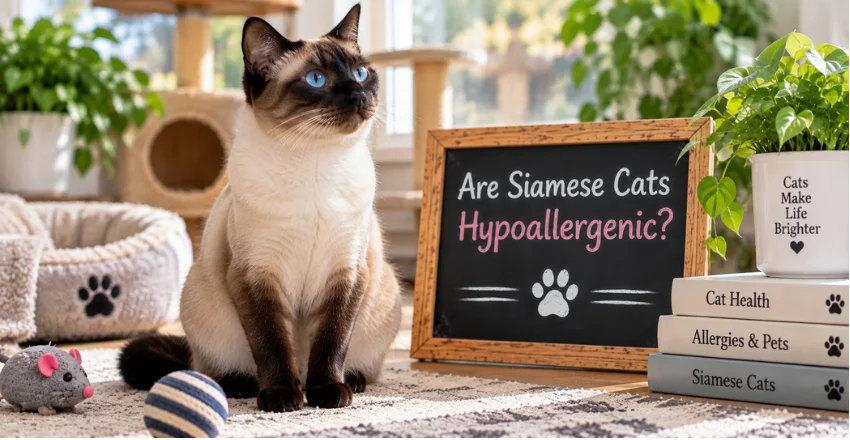
If you are asking are Siamese cats hypoallergenic, the answer is no. No cat breed is proven allergy-free, including this one. The useful question is whether your symptoms stay manageable around a specific cat.
| Key point | What it means |
|---|---|
| Hypoallergenic status | No cat breed is truly hypoallergenic. |
| Main allergen | Fel d 1 is a major cat allergen. |
| Fur length | Short fur does not remove allergy risk. |
| Individual response | Symptoms can vary between people and individual cats. |
| Best next step | Spend time with the cat and consult an allergist if needed. |
Direct answer: Siamese cats are not truly hypoallergenic because all cats produce allergens. The main concern is Fel d 1, which spreads from saliva and skin onto dander and fur. A short coat may make cleaning easier, but it does not guarantee fewer allergens or milder symptoms.
Key Takeaways
- No cat breed is guaranteed allergy-free, including the Siamese.
- Cat allergies usually involve proteins from saliva, skin, and dander, not fur alone.
- Short hair and lighter shedding do not reliably predict household allergen levels.
- Testing your reaction before adoption is safer than relying on a breed label.
Are Siamese Cats Hypoallergenic? Why the Answer Is No
Major U.S. allergy organizations say no cat breed is truly hypoallergenic. Cats produce several proteins that can trigger reactions in sensitive people. The breed name does not remove that biological fact. Fel d 1 is the best-known cat allergen and is produced mainly in saliva and skin glands. Grooming transfers it onto the coat, where particles can spread through a home.
The National Institute of Environmental Health Sciences reports that these allergens stay airborne easily and can remain on carpets and furniture for months. That means fur is a carrier, rather than the original cause.
What Actually Causes Cat Allergies?
Cat allergy symptoms begin when the immune system reacts to certain feline proteins. These proteins can appear in saliva, dander, skin flakes, and urine. They can also settle on furniture, bedding, carpets, and clothing. Common symptoms include sneezing, congestion, itchy eyes, and a runny nose. Some people also develop coughing, wheezing, or asthma symptoms after exposure. Severity can vary widely from person to person.
Does a Siamese Cat’s Short Coat Help?
The Siamese has a sleek, short coat that is easy to groom. Pet-care sources often describe the breed as a relatively light shedder. That trait can reduce visible hair, but visible hair is not the same as allergen exposure. Allergy specialists caution that hair length and shedding do not reliably predict cat allergen levels. A low-shedding cat can still leave allergenic proteins throughout a home. This is why the “short coat equals hypoallergenic” claim is too simple.
| Common claim | More accurate interpretation |
|---|---|
| Short-haired cats are safer. | Coat length does not make a cat allergy-free. |
| Less shedding means fewer allergies. | Shedding alone does not predict allergen levels. |
| One breed is hypoallergenic. | Reactions depend more on sensitivity and the individual cat. |
| Hair causes the allergy. | Proteins on dander, skin, saliva, and fur trigger reactions. |
How to Test Your Reaction Before Adopting
Spend meaningful time with the specific cat before making a long-term commitment. A brief visit may not reveal symptoms that develop after longer exposure. Repeat visits can give you a better picture of your personal response.
| Before adoption | What to do |
|---|---|
| Confirm your trigger. | Ask an allergist about testing if your symptoms are uncertain. |
| Meet the individual cat. | Spend time indoors with that cat more than once. |
| Watch for delayed symptoms. | Notice changes for several hours after exposure. |
| Consider your home. | Think about carpets, bedrooms, ventilation, and cleaning routines. |
| Plan medical support. | Discuss treatment options before symptoms become difficult. |
No home test can guarantee that future symptoms will stay mild. Allergy sensitivity can change, and exposure rises after a cat moves indoors. A careful trial gives better information than a breed reputation alone.
For more general animal-care topics, browse the Writinglish Pets section. It covers pet-focused guides beyond this allergy question. Use those resources to plan the practical side of pet ownership.
How to Reduce Cat Allergens at Home
Start by making the bedroom a cat-free space. You spend many hours there, so reducing exposure in that room can matter. Wash bedding regularly and keep the cat off pillows and upholstered sleeping areas.
A HEPA air cleaner can reduce airborne particles in frequently used rooms. Regular vacuuming with a high-efficiency system can also lower allergen buildup. Hard flooring is easier to clean than thick carpeting that traps dander.
Have a non-allergic household member handle brushing whenever possible. Grooming outdoors can keep loose material from spreading indoors. Wash your hands after close contact, especially before touching your face or eyes.
When Allergies or Asthma Need Extra Caution
People with asthma should take cat-triggered breathing symptoms seriously. Wheezing, chest tightness, or shortness of breath can signal more than mild nasal allergies. An allergist can help assess risk and discuss treatment before adoption.
Avoid assuming that repeated exposure will make the problem disappear. Some people remain sensitive, and symptoms can worsen with ongoing contact. Severe breathing difficulty needs urgent medical care. Elsewhere on the site: Wolf Size Comparison.
Writinglish also has a Health section for broader wellness reading. It should not replace care from a qualified allergy specialist. Use medical sources for diagnosis, treatment, and asthma decisions.
What This Means for a Future Siamese Owner
A Siamese may still fit some homes where allergies are mild and manageable. The decision should depend on your actual reaction, not a marketing label. Testing exposure before adoption can reduce the chance of a painful rehoming decision.
If you adopt, build allergen control into your daily routine from the start. Keep one sleeping area cat-free and use filtration where you spend the most time. Revisit your plan with an allergist if symptoms become persistent.
You should also plan routine veterinary care before bringing a cat home. Writinglish has a guide to choosing the right vet hospital for your pet. A trusted clinic can support the cat’s long-term health needs.
Frequently Asked Questions
Are Siamese cats hypoallergenic?
No, they are not truly hypoallergenic. Like every cat breed, they produce proteins that can trigger allergies. A short coat does not make them reliably safe for sensitive people.
Do Siamese cats produce less Fel d 1?
There is no strong evidence that the breed consistently produces less Fel d 1. Individual cats can vary in the amount of allergen they produce. Breed alone is not a dependable predictor of your reaction.
Do Siamese cats shed a lot?
They are commonly described as light to moderate shedders with a short coat. That can make grooming and household hair easier to manage. Shedding level still does not determine whether someone will react.
Can I live with a Siamese if I have cat allergies?
Some people with mild symptoms can manage cat exposure with careful routines. Others react strongly even to a low-shedding individual. Spend time with the exact cat and discuss persistent symptoms with an allergist.
Are hairless cats better for people with allergies?
Hairless cats still produce the proteins that cause cat allergies. They can spread allergens through skin oils, saliva, and dander despite lacking a normal coat. No hairless breed is guaranteed to be allergy-free.
A Practical Next Step
Treat the word “hypoallergenic” as a warning to ask better questions, not as a guarantee. Learn how your body reacts to the individual cat you hope to adopt. Then build a realistic cleaning and medical plan around that response.
A careful decision protects both you and the animal. Meet the cat, prepare your home, and speak with an allergist if you’re concerned about symptoms. Good preparation makes long-term care easier for everyone involved.